
ONLINE AND DISTANCE LEARNINGBring more of the university to your online students.
Your online students may never set foot in the places they're studying. But they can still explore them, examine the objects inside, and work through situations they'd otherwise only read about.
We create interactive courses and immersive learning environments that give distance programs new ways to teach beyond the lecture.
The problem
A student can earn an entire degree without ever setting foot on campus. That's one of the remarkable things about online education.
But it creates some peculiar teaching problems. What do you do with the field visit that used to be part of a course? How do you teach someone to recognize a piece of equipment they've never seen? And what happens to the parts of a subject that a student has to experience to understand?
For Asynchronous Students
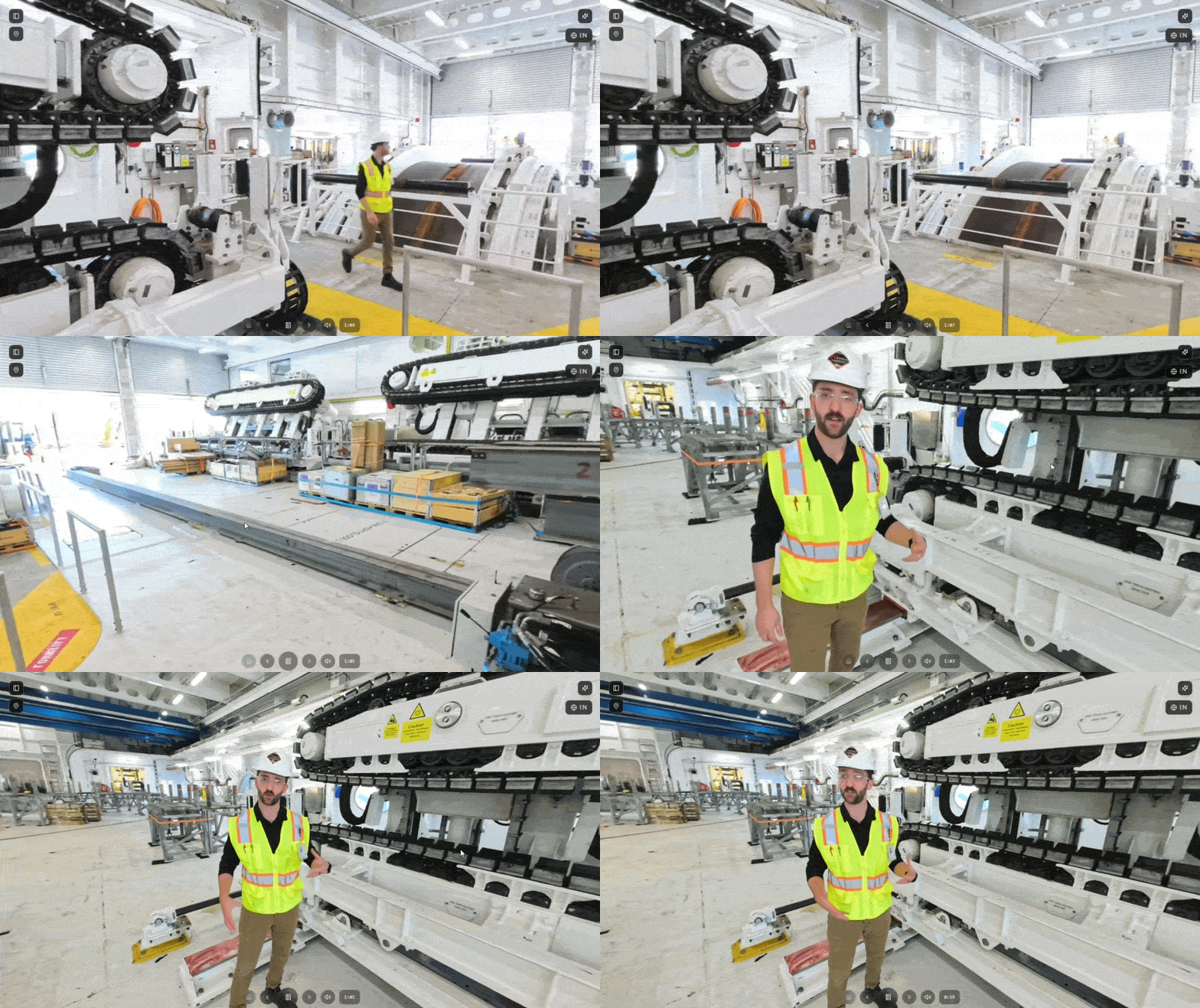
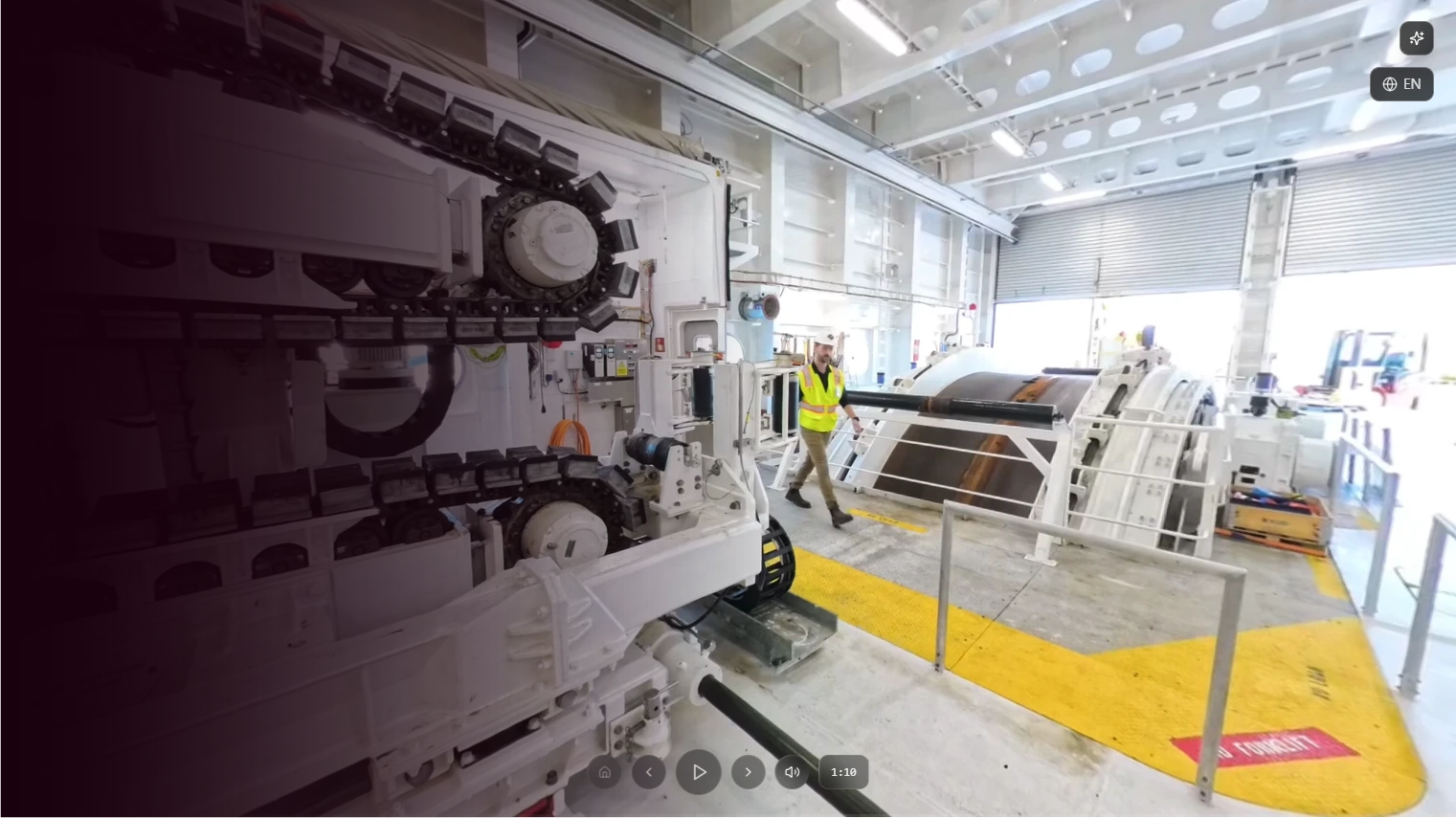
A place instead of a slide.
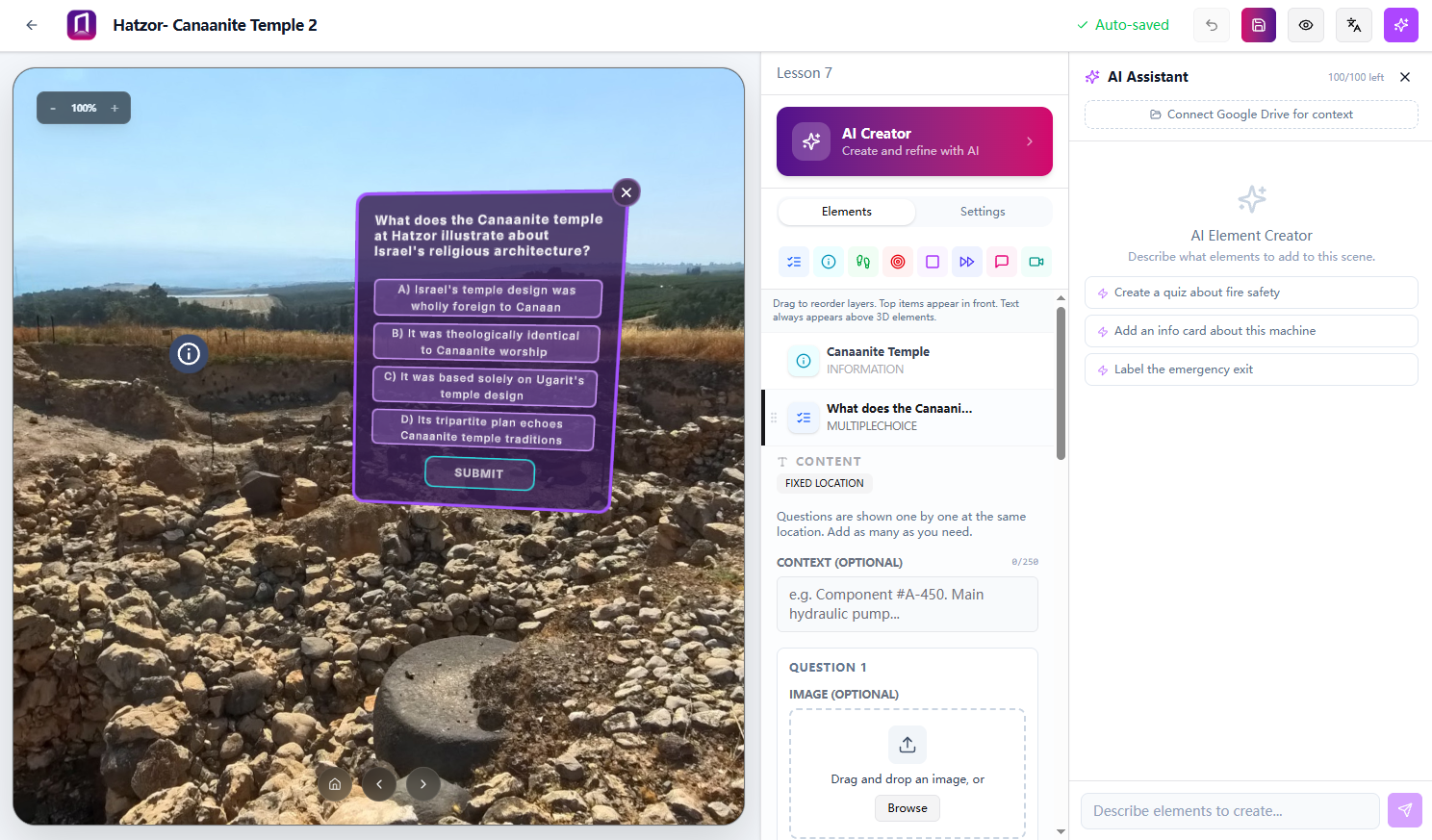
A 360° environment a student moves through on their own, examining what interests them and answering questions where the answers are.
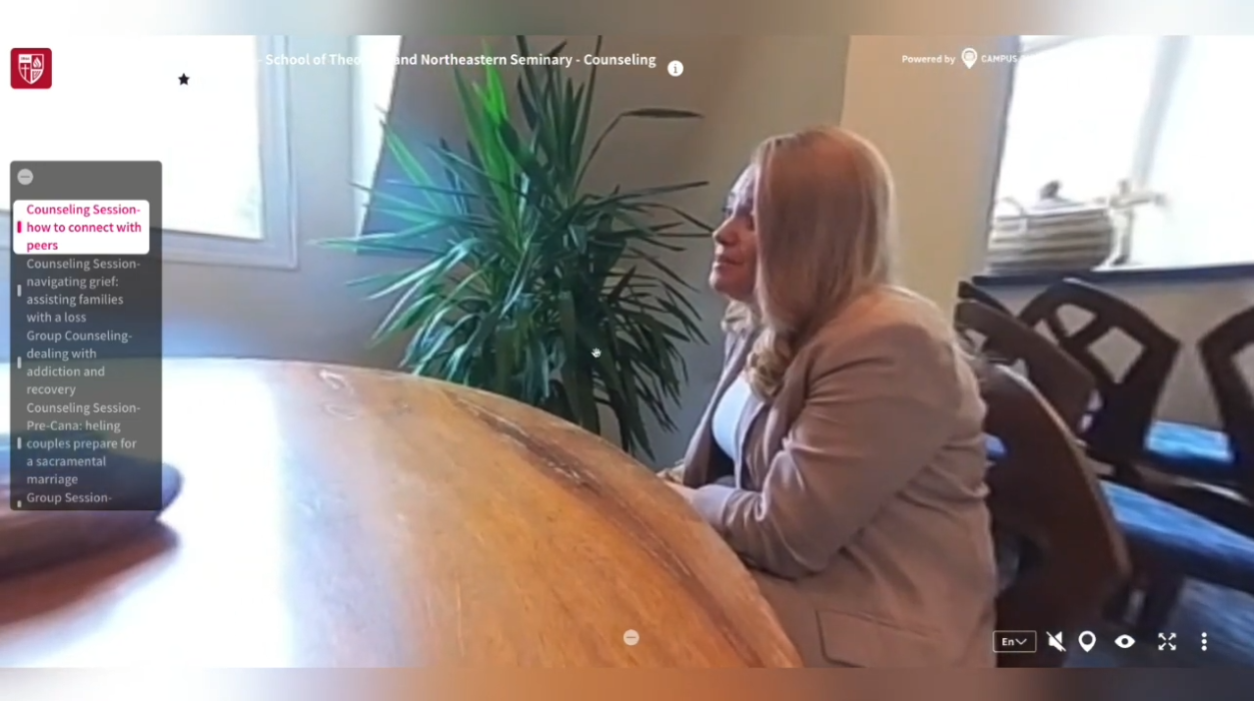
A situation that responds.
Role-play scenarios where what a student chooses decides what happens next. The closest thing to practice an asynchronous program can offer.
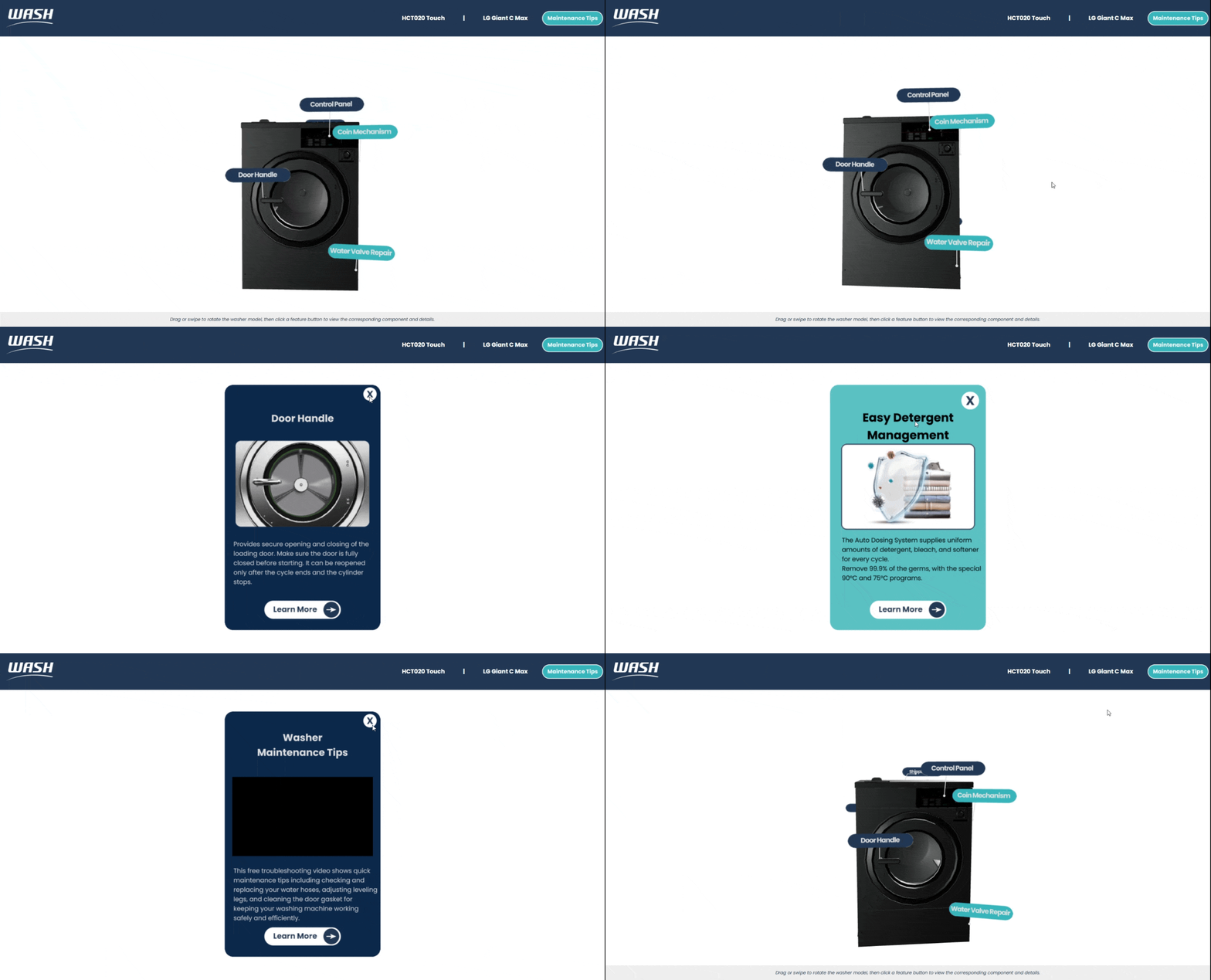
Time to examine the details.
Give every student access to interactive 3D models of instruments, specimens, or equipment. They can rotate the model, examine individual components, and return to it whenever they need another look.
Built from what you already teach.
Lecture recordings, slides, and conference sessions go straight in. Draft from scratch, or let AI do the first pass.
Students fail lecture‑based courses 1.5x as often
34% fail when taught by lecture. 22% when taught through active learning.
Meta-analysis of 225 undergraduate STEM courses. Freeman et al., PNAS, 2014.
When You Do Get Everyone Together
Spatial virtual classrooms give online cohorts somewhere to meet beyond the usual grid of faces. Students can gather in smaller groups, hold separate conversations, and come back together as they would in a physical classroom.
Use them for seminars, office hours, group projects, or the occasional session where you want the whole cohort together.
Typical Programs
Clinical Research Coordinator Certificate
- 1 Regulatory framework and GCP 45 min
- 2 Protocol review and feasibility 40 min
- 3 Informed consent in practice 45 min
- 4 Source documentation and data integrity 40 min
- 5 Managing monitoring visits 30 min
- 6 Final assessment 30 min
Common Question
-
Generally, no. Immersive courses, 3D models, and scenarios can be completed asynchronously, at whatever hour a student is working, or delivered synchronously if an instructor prefers to run them with a cohort present. Meanwhile, our optional spatial virtual classrooms are designed for synchronous use.
-
Yes. Courses publish to SCORM, and completion and scores export or push into the system you already run.
-
Yes, under your own accreditation. You get dated completion and assessment records per learner, which is the evidence a CEU award rests on. We do not accredit anything ourselves.
-
A browser, on whatever phone, tablet or laptop they already have. Headsets work too, if anyone has one.
Start with one module.
Send us a week of your program and we will show you what we would do with it.