
LAB AND TECHNICAL INSTRUCTIONMake the Most of Every Hour in the Lab
Build training around your own labs and equipment, so students arrive already knowing their way around the instrument. When something goes wrong mid-run, a supervisor can see exactly what they're seeing, wherever they happen to be.
The problem
Lab time is the scarcest resource a technical program has. Benches, instruments, and demonstrator hours are all limited, and the cohort is not. Most of a session gets spent on things a student could have learned beforehand: where the controls are, what the sequence is, what the instrument sounds like when it is running correctly.
And labs keep running when the people who know them best are not there. A principal investigator is at a conference, a lab manager is off site, a run starts at six in the evening. Something behaves oddly, and the person holding the phone has to describe it: a noise, a reading that looks wrong, a color that is not quite right. Now the supervisor is trying to diagnose a problem they can't even see.
Help in the Lab
See what they are seeing.
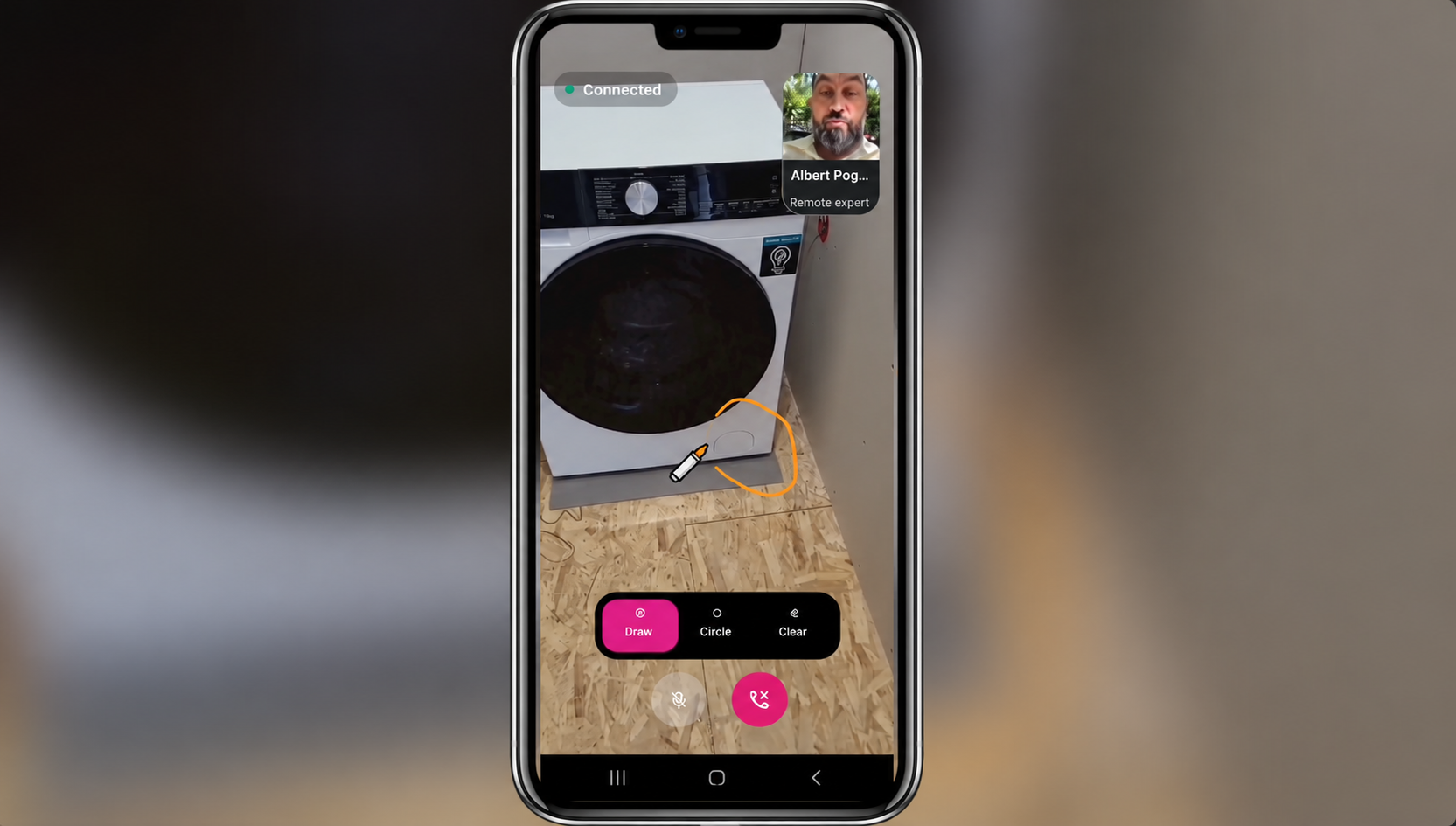
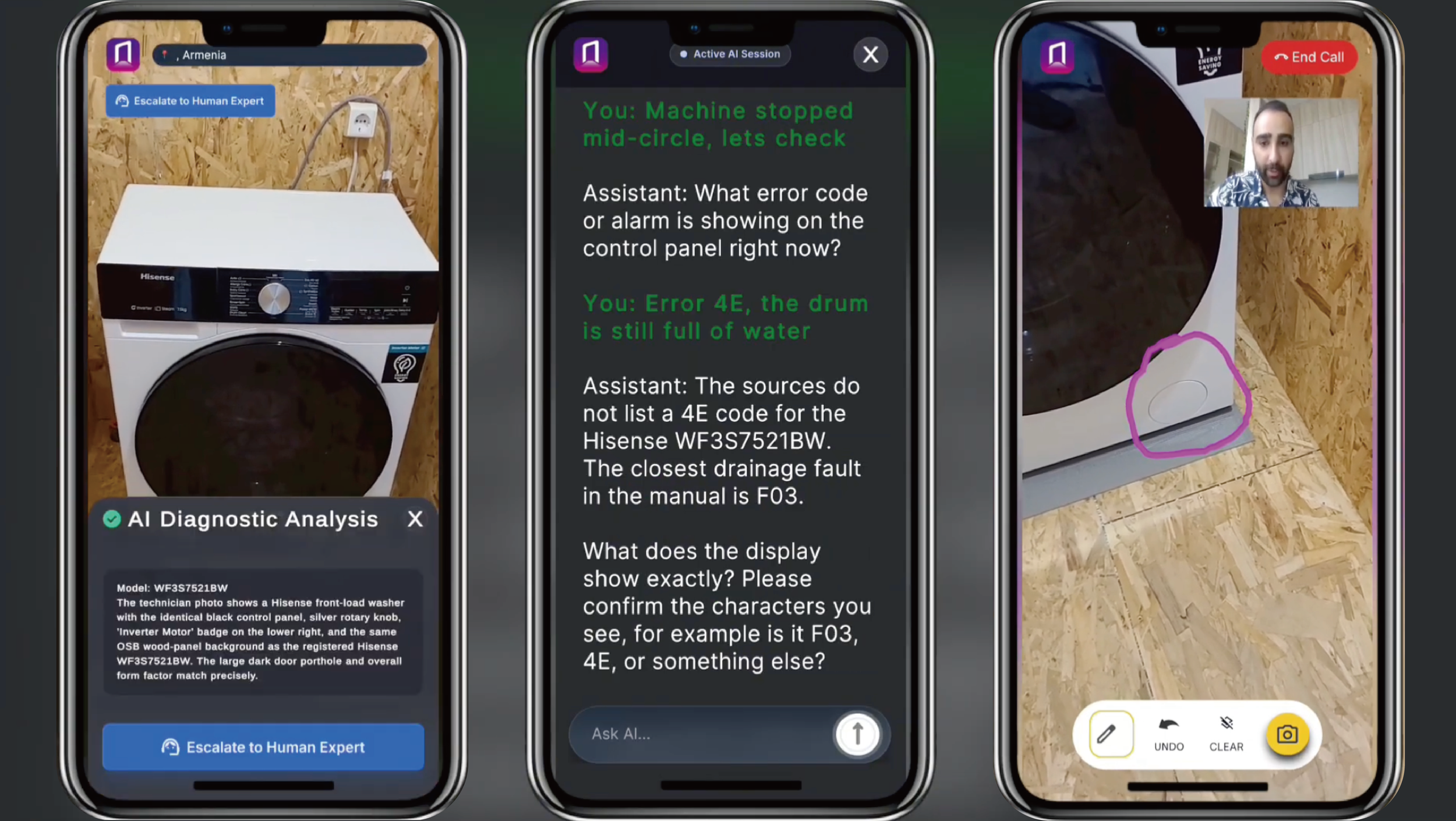
A student or junior researcher opens a session from their phone. The supervisor watches the live camera feed and marks it up directly, circles and arrows that stay locked to the component as the camera moves. "That connector" means that connector, not a description down the phone.
From a conference, from home, from the next building.
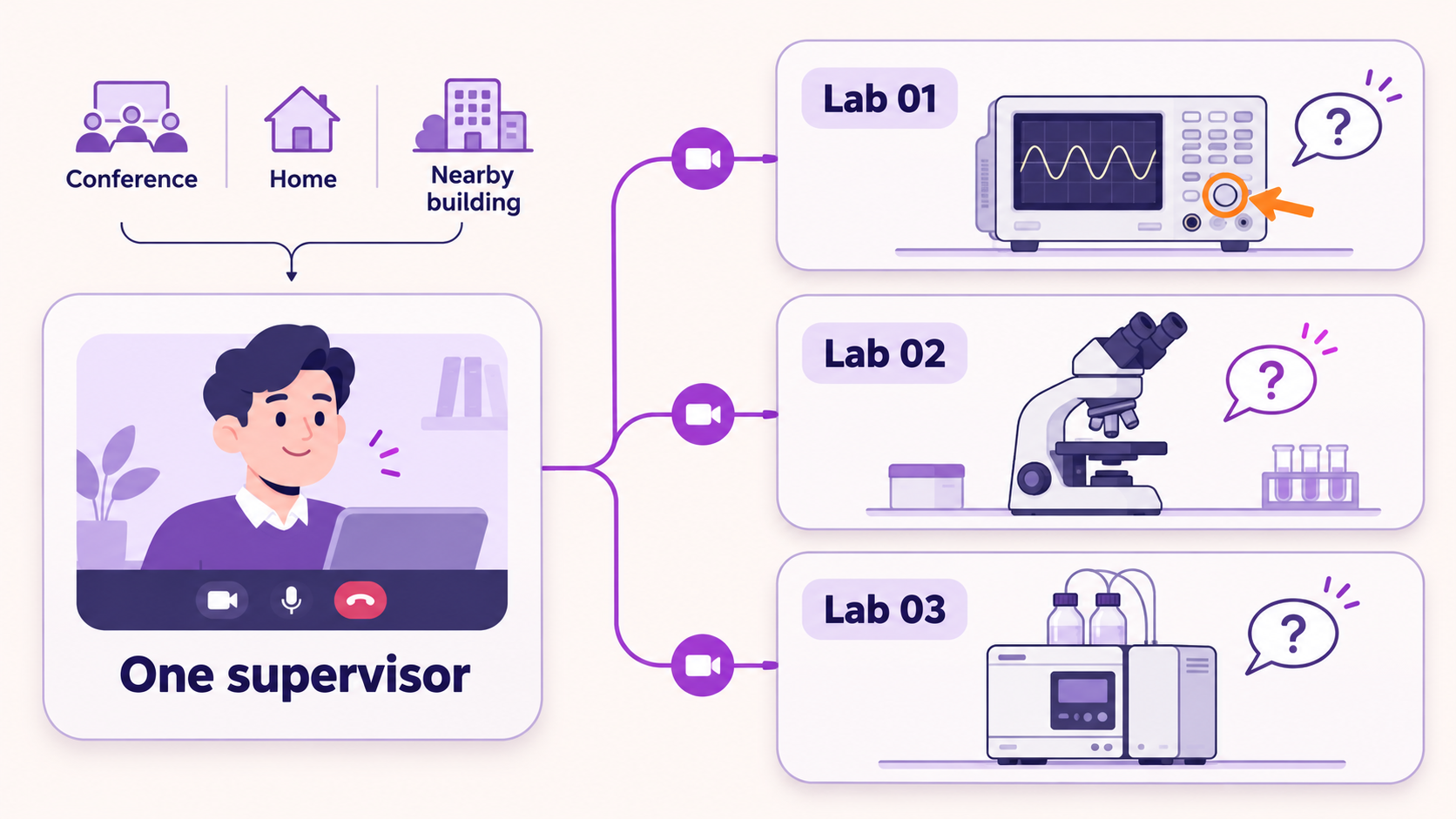
The person who knows the instrument does not have to be in the room, or in the country. One lab manager can cover several labs, and a PI can answer a question between sessions at a conference rather than after it.
Answers from your own protocols.
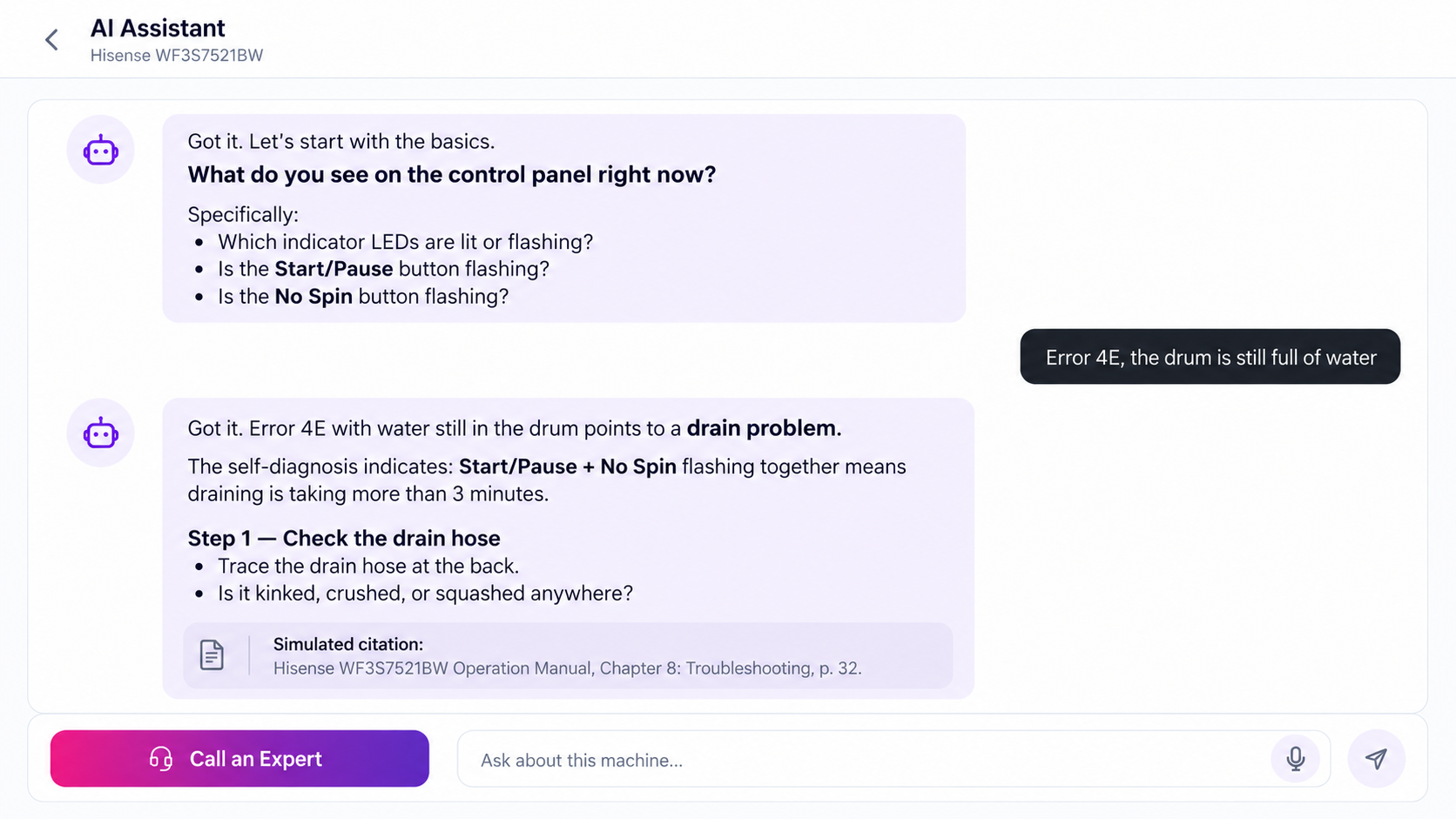
Before anyone is interrupted, an AI assistant answers from your own method sheets and lab manuals. When it does not know, it says so and opens a session rather than guessing.
Sessions are recorded and kept.What we build
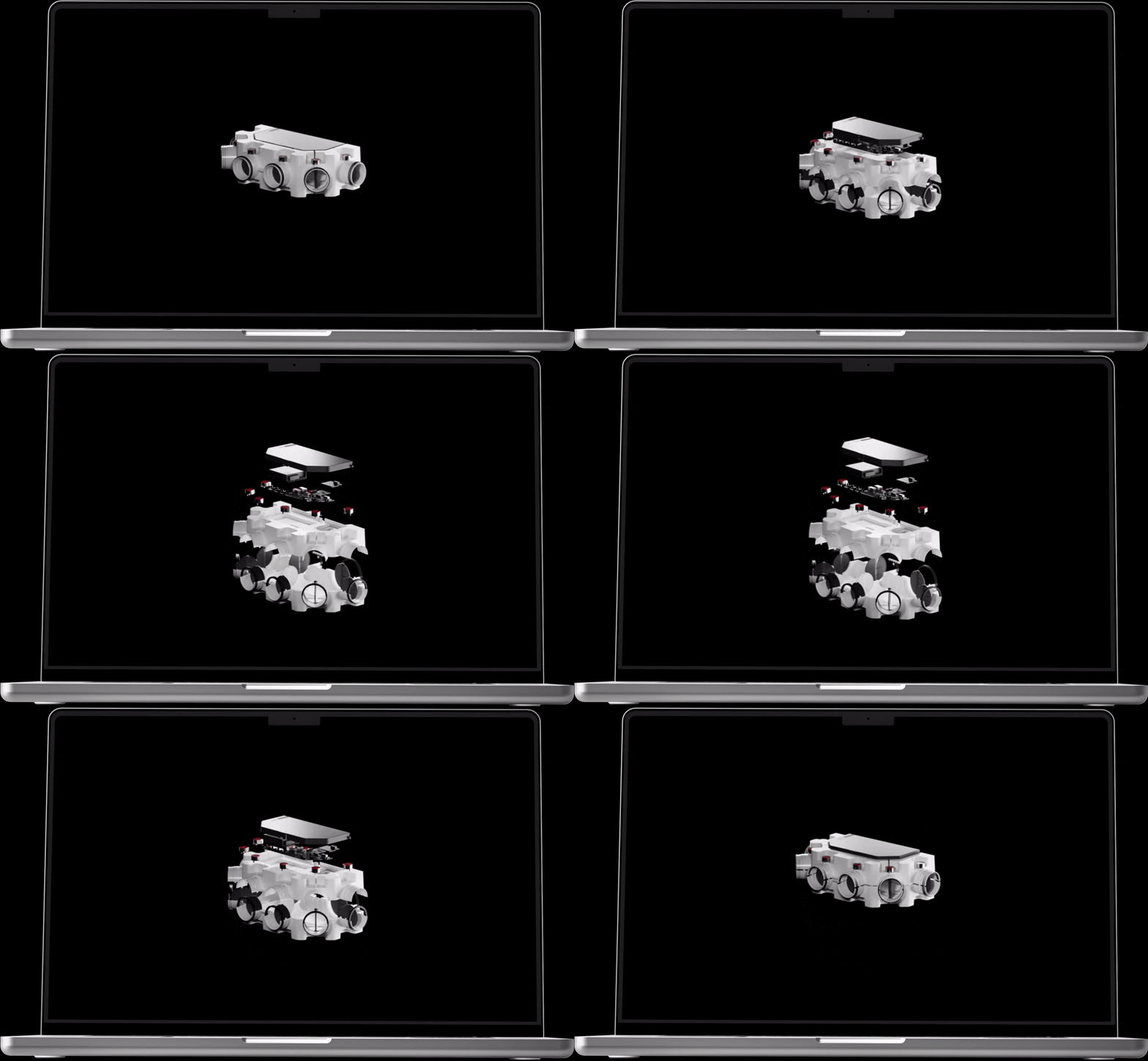
A closer look at your equipment.
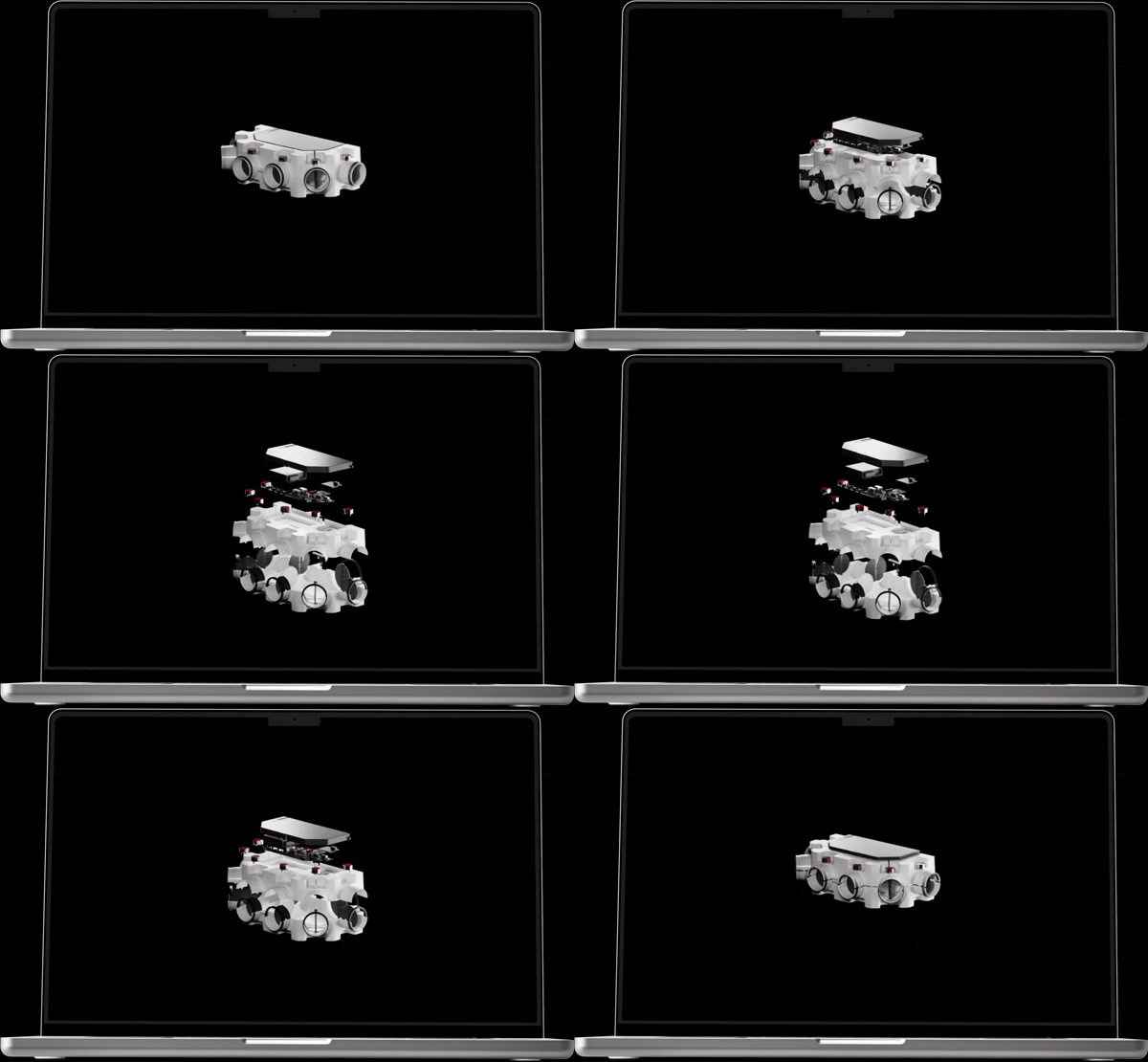
Students can turn an instrument around, examine its components, and see how everything fits together, without taking up a minute of lab time.
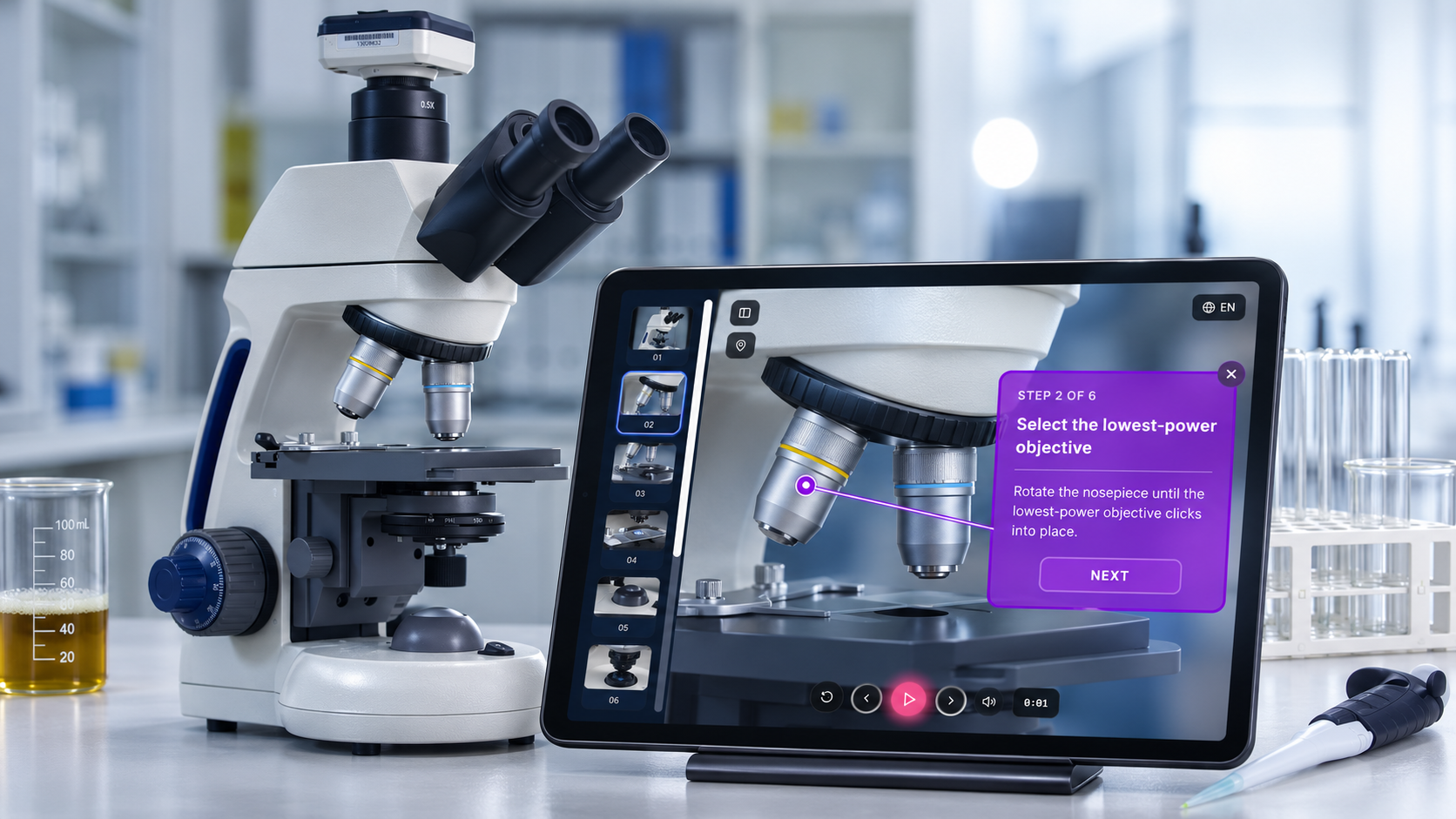
Show students how it's done.
Film procedures as they're actually performed in your lab, with each step explained and the relevant warnings built into the lesson.
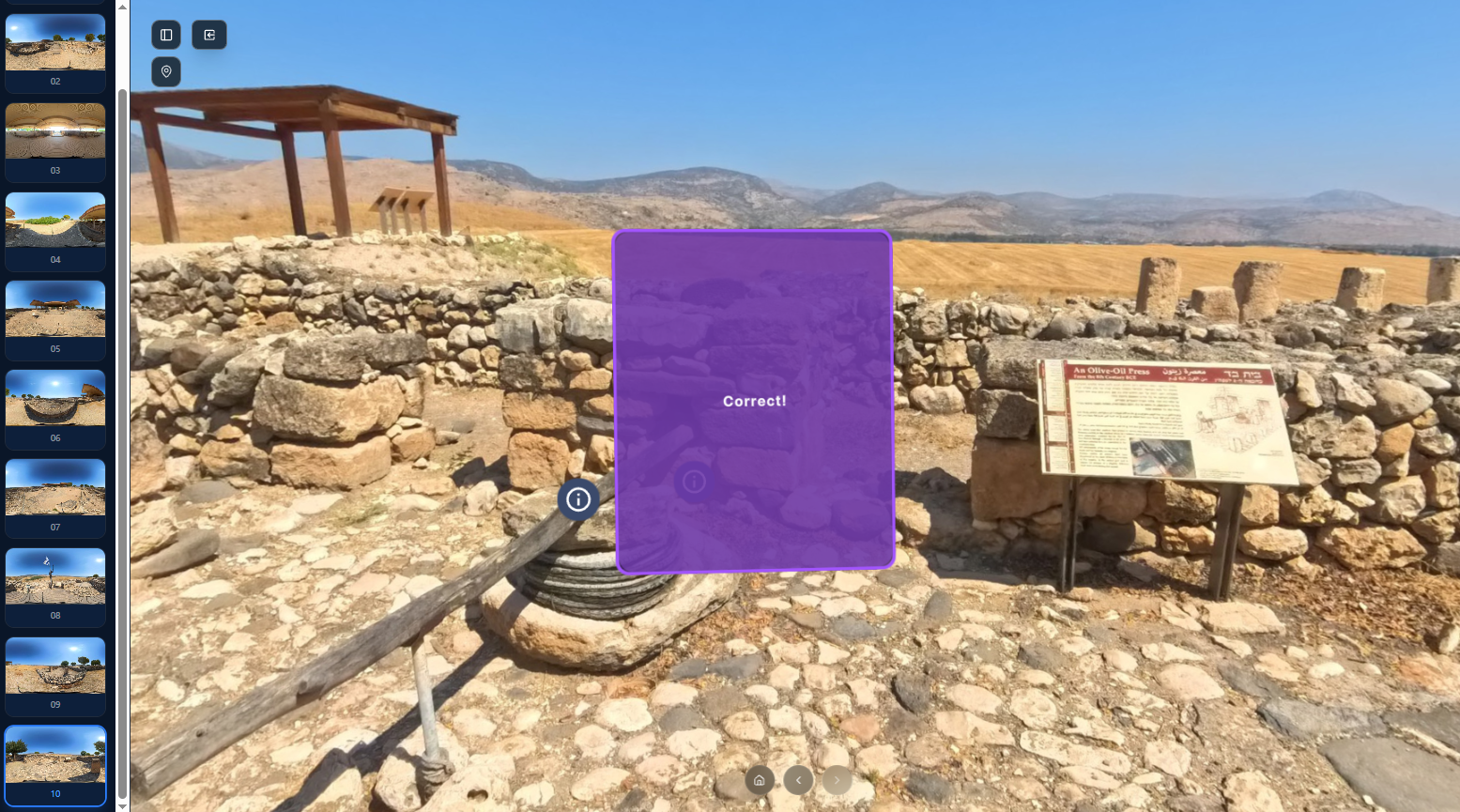
Checks before bench time.
Assessments students complete before they are allowed on the equipment, so demonstrator hours go to the parts that need a person.
Technicians can take a 3D model apart to understand how an assembly fits together, then point their phone at the real unit and follow the procedure overlaid on it. When something doesn't match the documentation, an expert can join the session, see what they see, and mark up their screen.
It all runs on standard phones and tablets, so the training goes wherever the work does, from a customer's home to the back of a service van.
Depth, on the phone they already carry
What it takes to train a technician
Technicians arrive untrained, and many don't stay.
How We Work
We build it.
Our studio scans your equipment, builds interactive 3D models, sets up AR on the real unit, and films the procedures your technicians need most.
Then your team runs it.
Repair courses are yours to build and update on 360Works. Add new footage and update content for the latest models at any time.
FAQs
-
Field service is one of the most common uses. Procedures are filmed on the equipment your technicians actually visit and carried on the phone already in their pocket, and LiveOps puts a senior technician on live video for the jobs that need one.
-
One course covers as many models as share a procedure. Where models differ, the course branches at that step rather than being rebuilt from scratch.
-
Existing service manuals help a great deal. They become the structure of the course and the source the AI assistant answers from.
-
Yes. LiveOps puts a senior technician on live video, drawing on what the camera sees, so an unfamiliar fault does not turn into a second visit.
-
Equipment and repair training like this replaces the repetition, not the hands-on part. Sign-off still happens in person; explaining the same procedure for the fifth time does not have to.
Tell us what's hard to train on.
Send us the thing you can't put in front of people, and we'll tell you how we'd teach it.
Prefer to talk it through? [Book a call]