
Train on the unit, not the manual.
Field Service & Technician Training.Every model, every fault, every revision.
Built from scans and footage of your own equipment, on the phone your techs already carry.
The problem
Service documentation is accurate, but it’s flat. A diagram identifies the part without showing how it comes out, what surrounds it, or where the procedure tends to go wrong. That knowledge usually passes from senior technicians to new ones in the field, when schedule allows.
With new models released every year, many technicians encounter a unit’s internals for the first time on a service call.
What we build
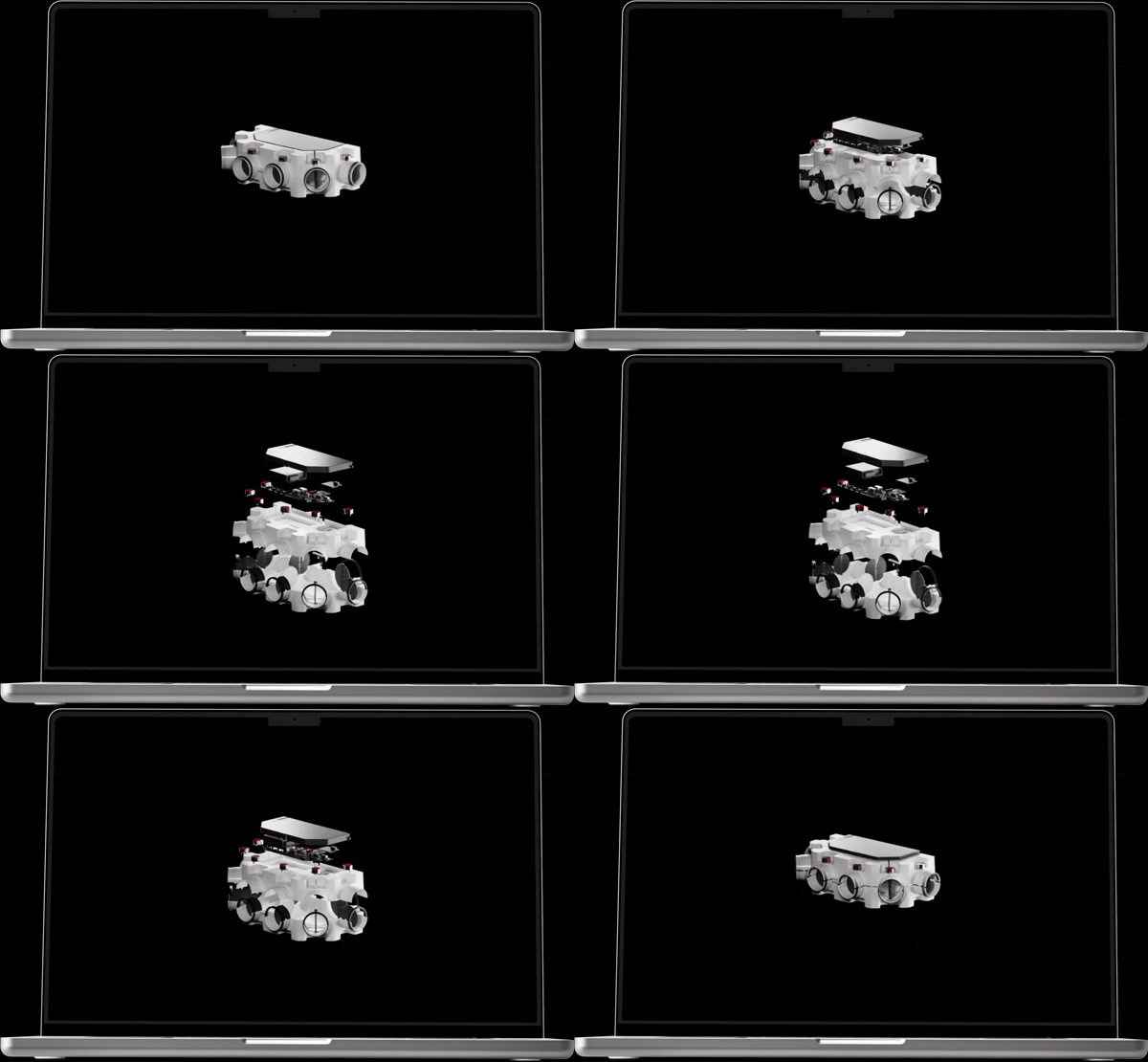
Interactive 3D models.
Explode the assembly, rotate it, isolate a part, put it back together. Built from scans of your actual equipment, not generic CAD.
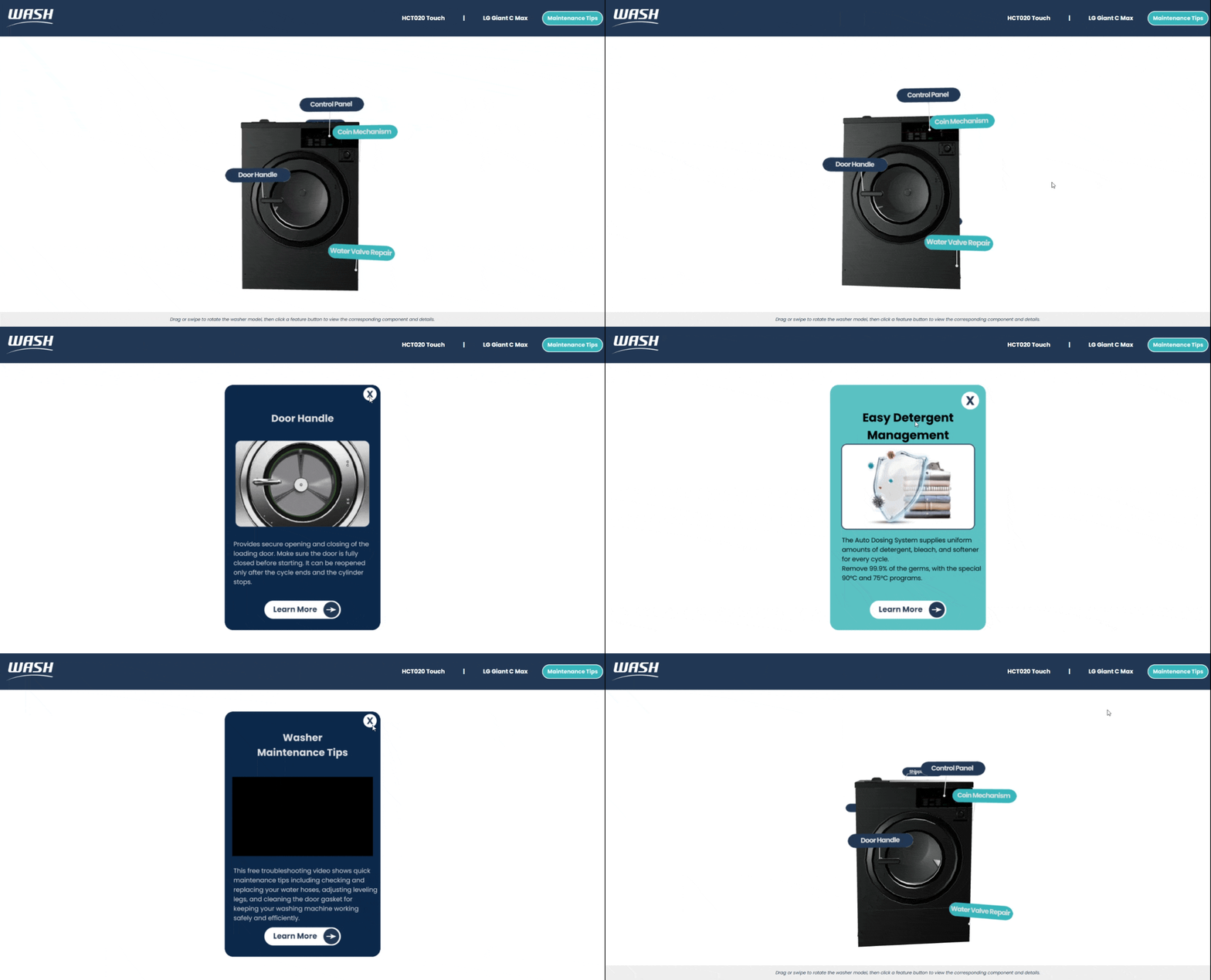
AR on the real unit.
Point a phone at the machine and the right procedure appears where it belongs. Object recognition, no marker required, no headset.
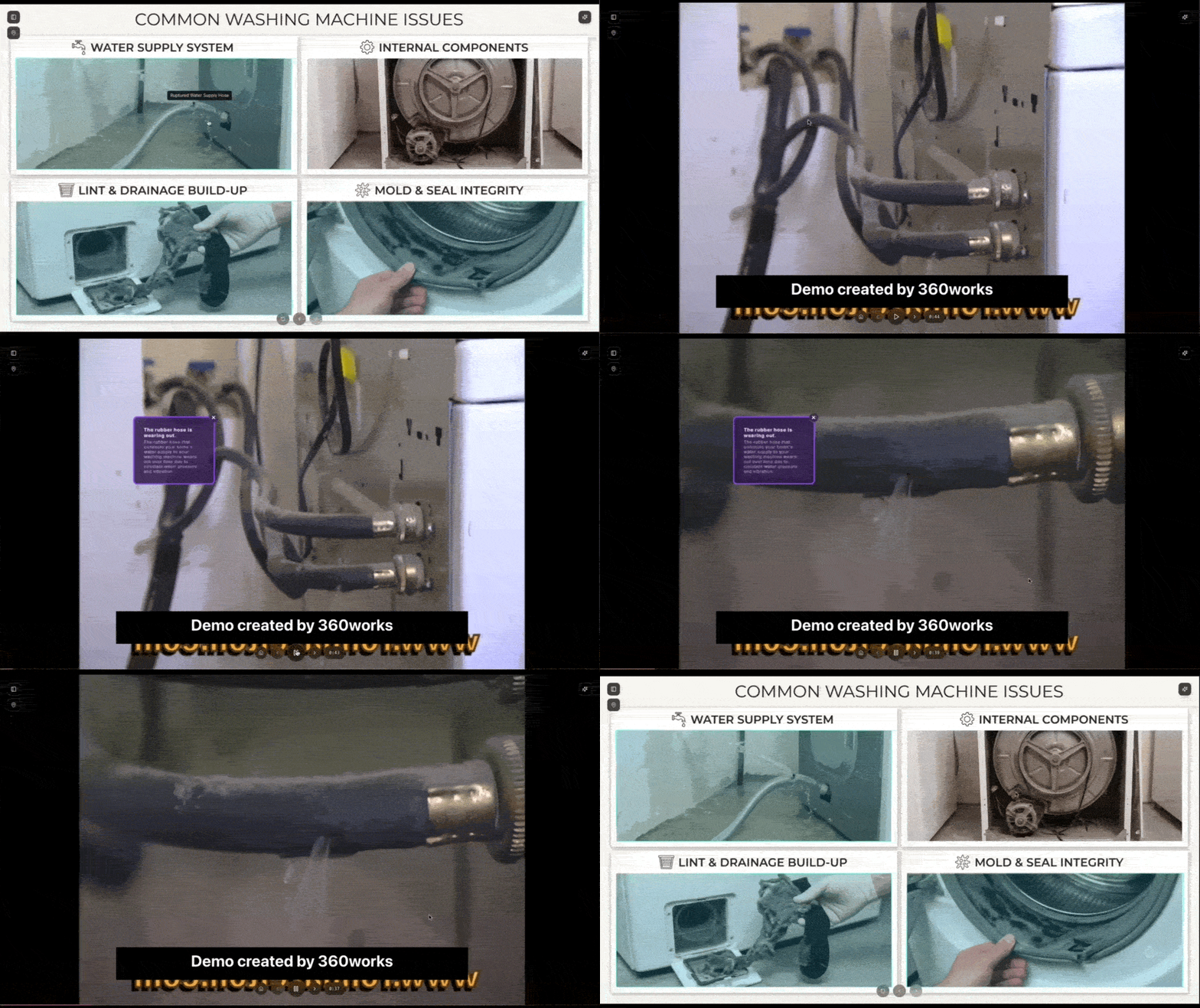
Procedure courses from real footage.
A repair filmed once, broken into steps, with pop-ups at the moment they matter and a quiz at the end.
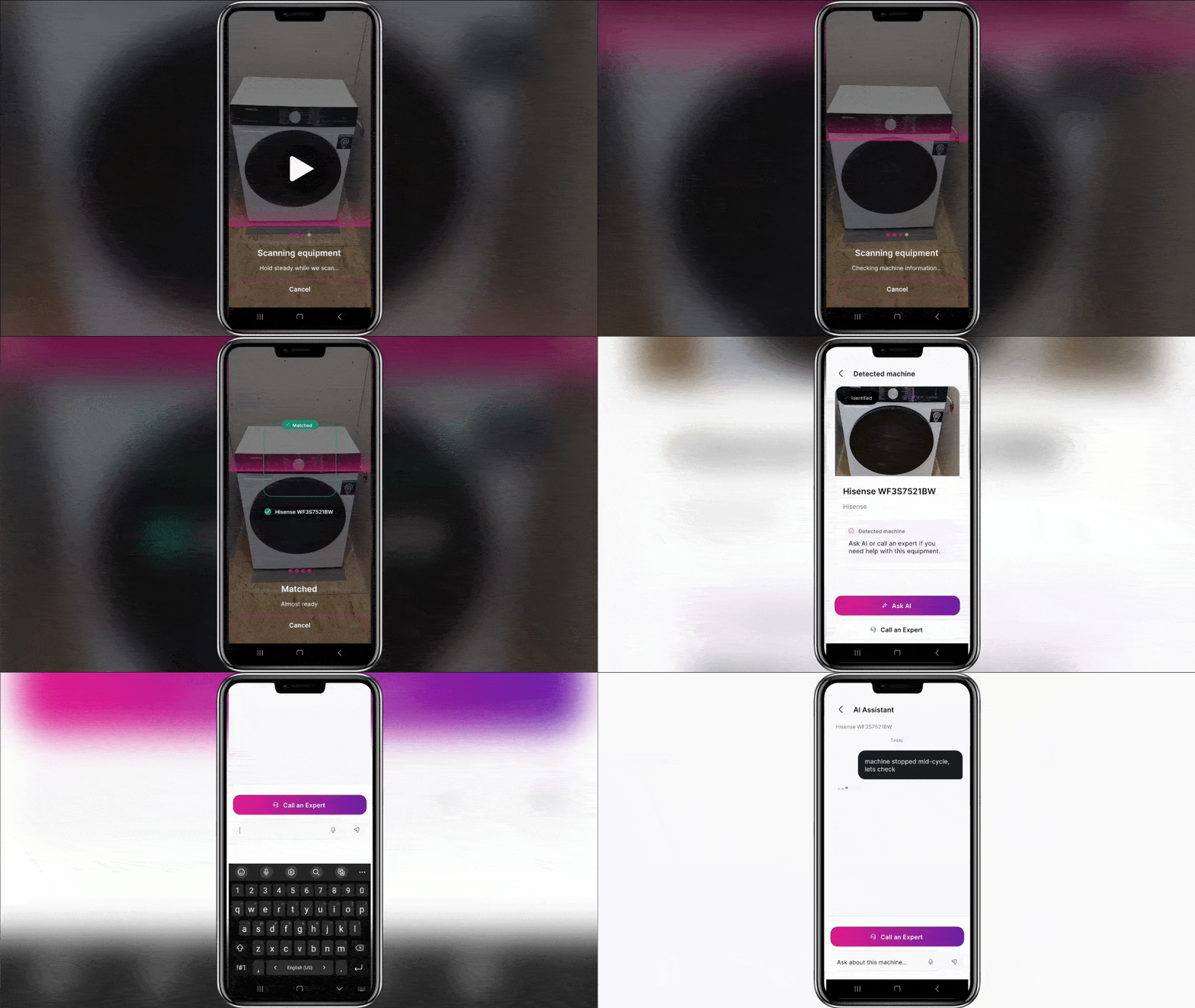
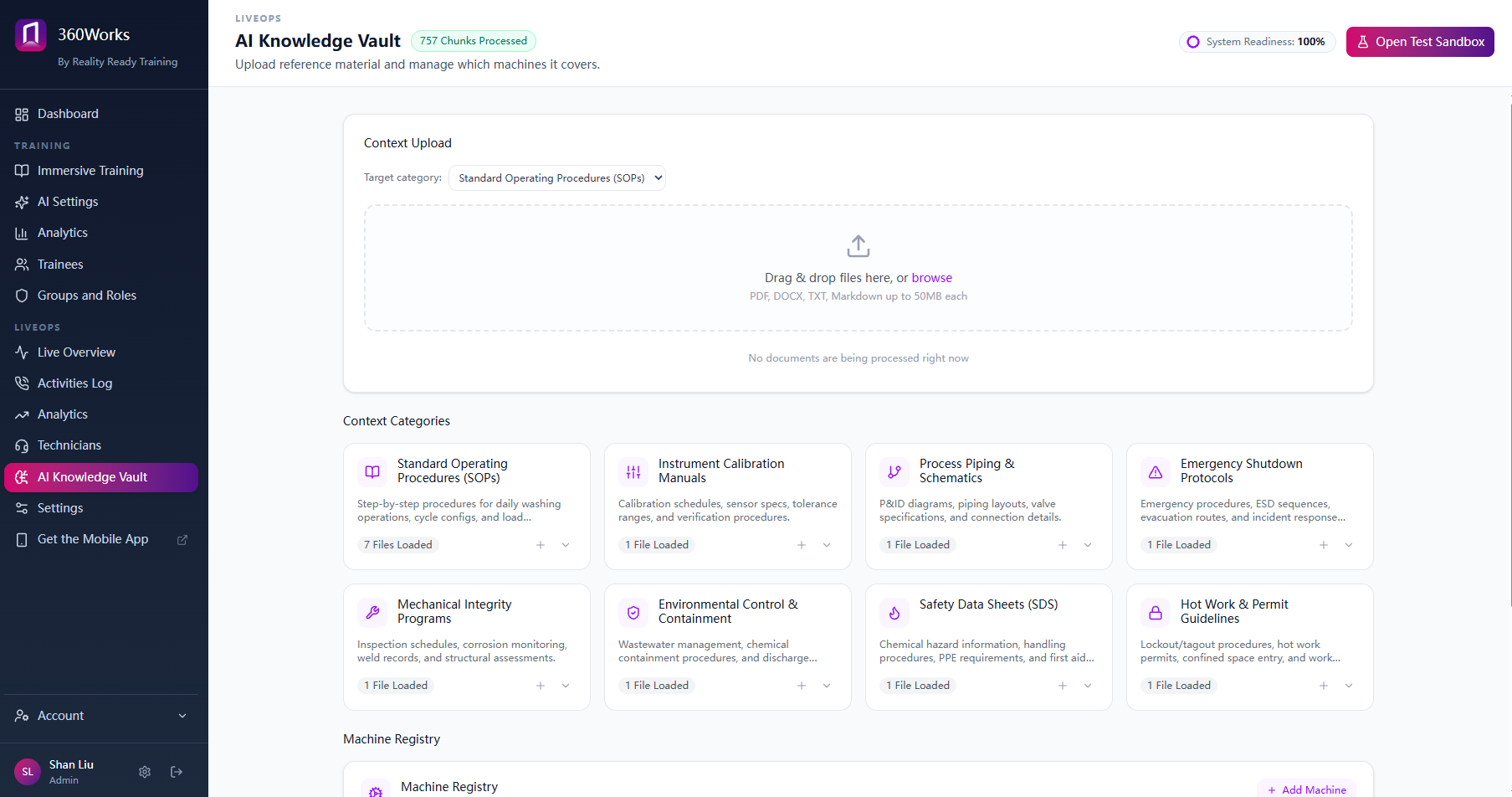
Answers from your own manuals.
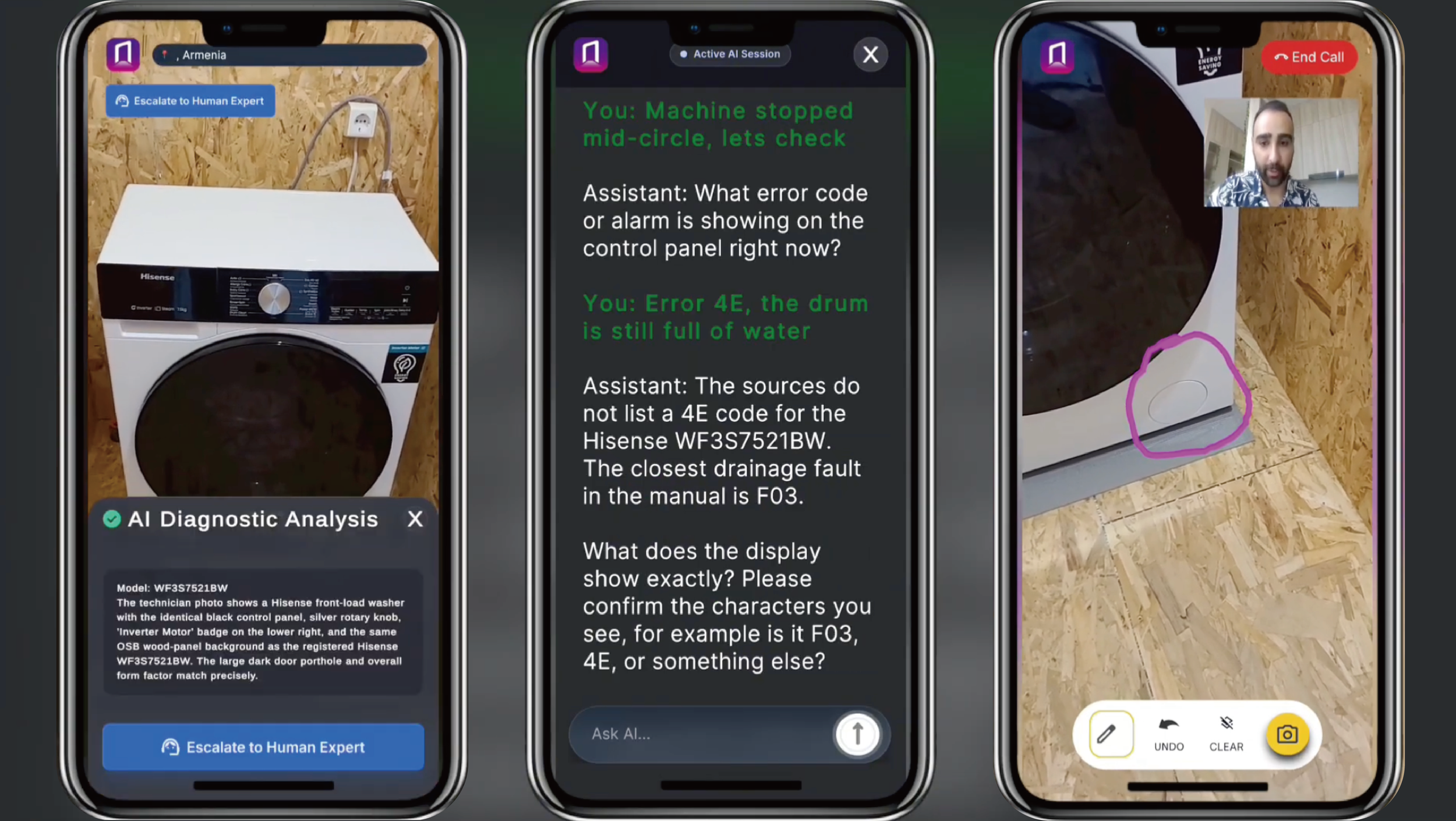
A technician photographs the unit and an AI assistant returns the procedure for that model, drawn from your own documentation rather than a general-purpose model guessing at equipment it has never seen.
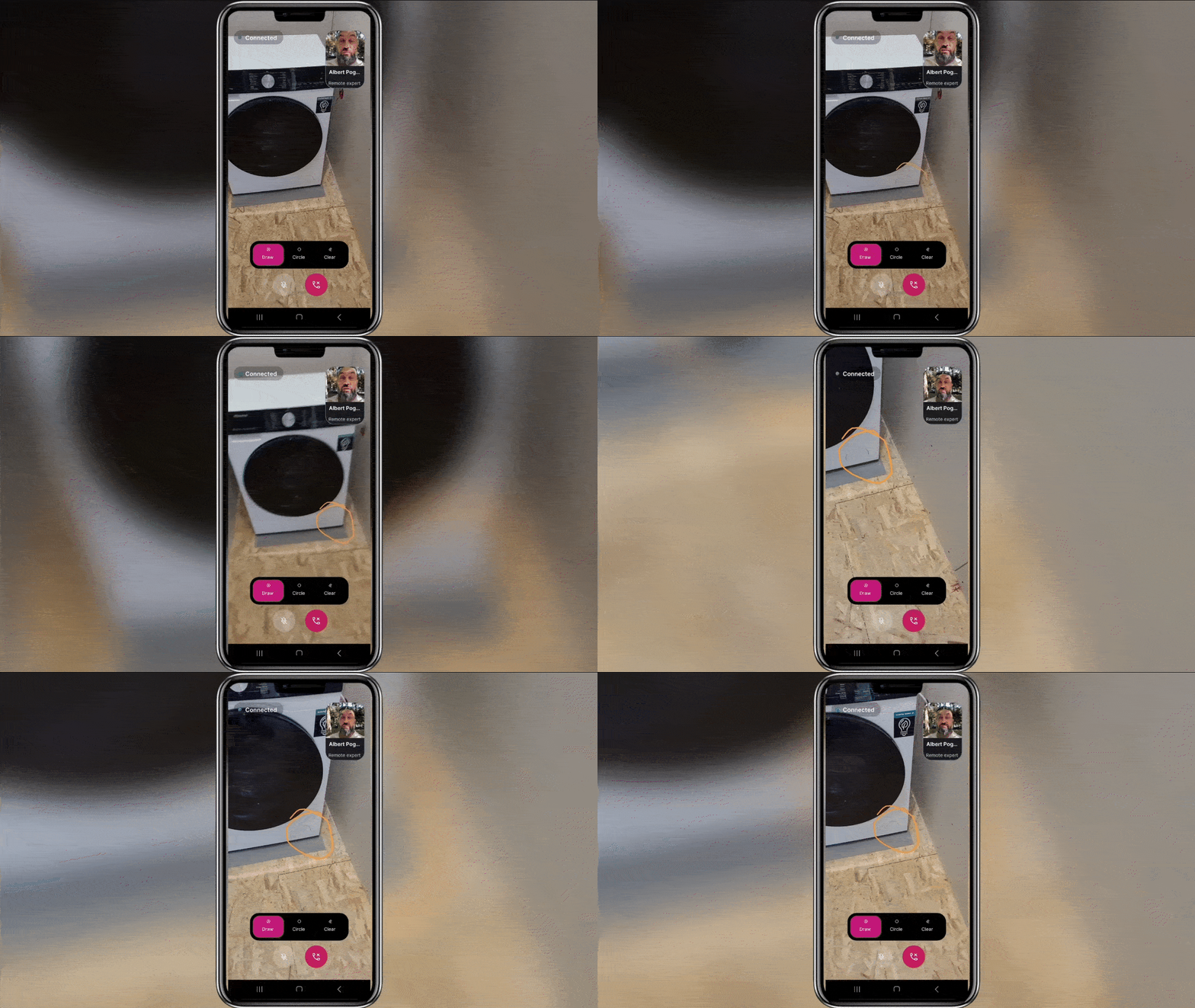
Live remote assistance.
When the tech is in front of it and stuck, an expert sees what they see and draws on the screen.
Technicians can take a 3D model apart to understand how an assembly fits together, then point their phone at the real unit and follow the procedure overlaid on it. When something doesn't match the documentation, an expert can join the session, see what they see, and mark up their screen.
It all runs on standard phones and tablets, so the training goes wherever the work does, from a customer's home to the back of a service van.
Depth, on the phone they already carry
What it takes to train a technician
Technicians arrive untrained, and many don't stay.
How We Work
We build it.
Our studio scans your equipment, builds interactive 3D models, sets up AR on the real unit, and films the procedures your technicians need most.
Then your team runs it.
Repair courses are yours to build and update on 360Works. Add new footage and update content for the latest models at any time.
FAQs
-
Field service is one of the most common uses. Procedures are filmed on the equipment your technicians actually visit and carried on the phone already in their pocket, and LiveOps puts a senior technician on live video for the jobs that need one.
-
One course covers as many models as share a procedure. Where models differ, the course branches at that step rather than being rebuilt from scratch.
-
Existing service manuals help a great deal. They become the structure of the course and the source the AI assistant answers from.
-
Yes. LiveOps puts a senior technician on live video, drawing on what the camera sees, so an unfamiliar fault does not turn into a second visit.
-
Equipment and repair training like this replaces the repetition, not the hands-on part. Sign-off still happens in person; explaining the same procedure for the fifth time does not have to.
Tell us what's hard to train on.
Send us the thing you can't put in front of people, and we'll tell you how we'd teach it.
Prefer to talk it through? [Book a call]